When society speaks of burnout, it tends to employ cinematic metaphors: a sudden nervous collapse in an executive boardroom, a dramatic hospital admission from cardiac stress, or an artist dramatically burning their canvases in a fit of exhausted madness. We imagine burnout as an explosion—a violent, catastrophic termination of capacity.
Yet for the vast majority of people navigating the contemporary world, exhaustion looks nothing like an explosion. It resembles, instead, a slow, imperceptible leak.
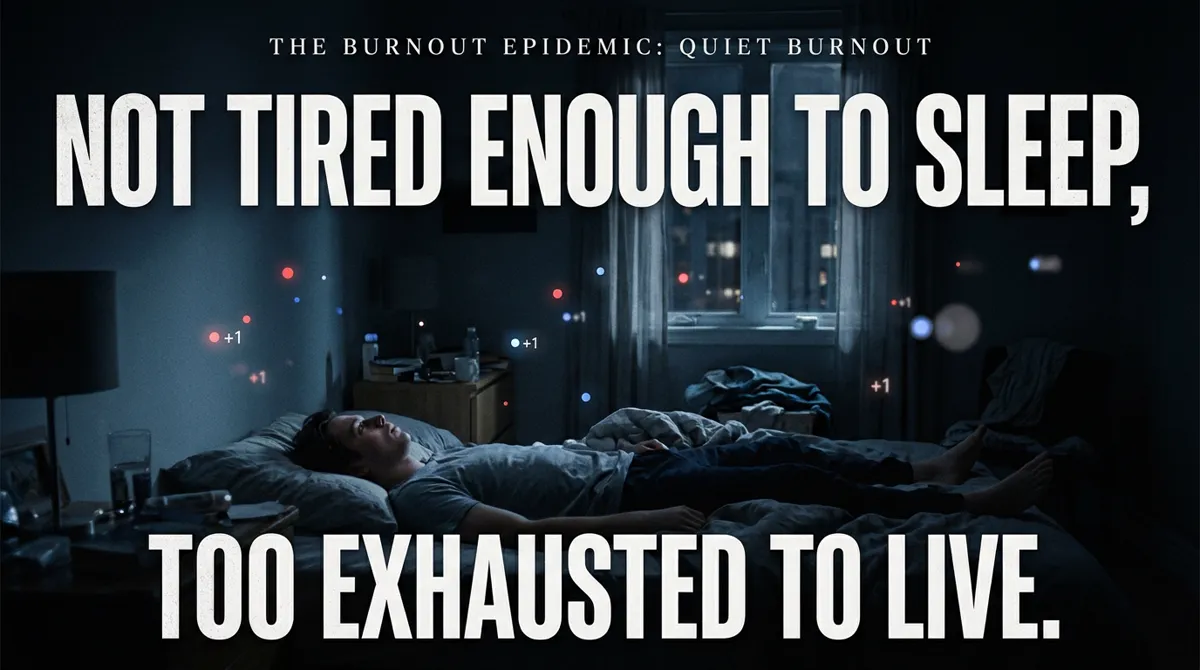
It is waking up after eight hours of sleep feeling as though you have been hauling gravel in your dreams. It is staring at a grocery store shelf paralyzed by twelve identical brands of olive oil. It is possessing the technical time to read a masterpiece, yet spending forty minutes opening and closing tabs in a silent stupor of ambient paralysis.
This is quiet burnout: the chronic, low-grade erosion of the human spirit in an environment that never permits the soul to power down.
The Disappearance of the Threshold
In historical epochs prior to the digital deluge, human existence was bounded by natural and physical thresholds. The working day ended when the sun slipped beneath the horizon or when the iron factory whistle echoed across the valley. To send a letter took a fortnight; to await a reply required the cultivation of existential patience.
There were natural vacuums of time built into the fabric of daily life: the silence of waiting for a carriage, the boredom of sitting on a train gazing at sheep, the utter impossibility of being reached by your employer while standing in a forest.
Modern technology promised to liberate us from friction. Food is summoned with a tap; every book ever written sits in your pocket; correspondence arrives at the speed of light. Yet in eliminating friction, we inadvertently destroyed the sanctuary of the threshold.
When labor can occur anywhere, labor occurs everywhere. When entertainment is infinite and instantaneous, leisure ceases to be restorative and becomes merely another cognitive input to process. We no longer transition between work and rest; we merely cycle between different varieties of glowing glass.
The Cognitive Background Hum
Psychologists who study attention speak of the “attentional blink”—the split-second pause the human brain requires after identifying a stimulus before it can process another. In the modern informational landscape, the attentional blink is permanently overridden.
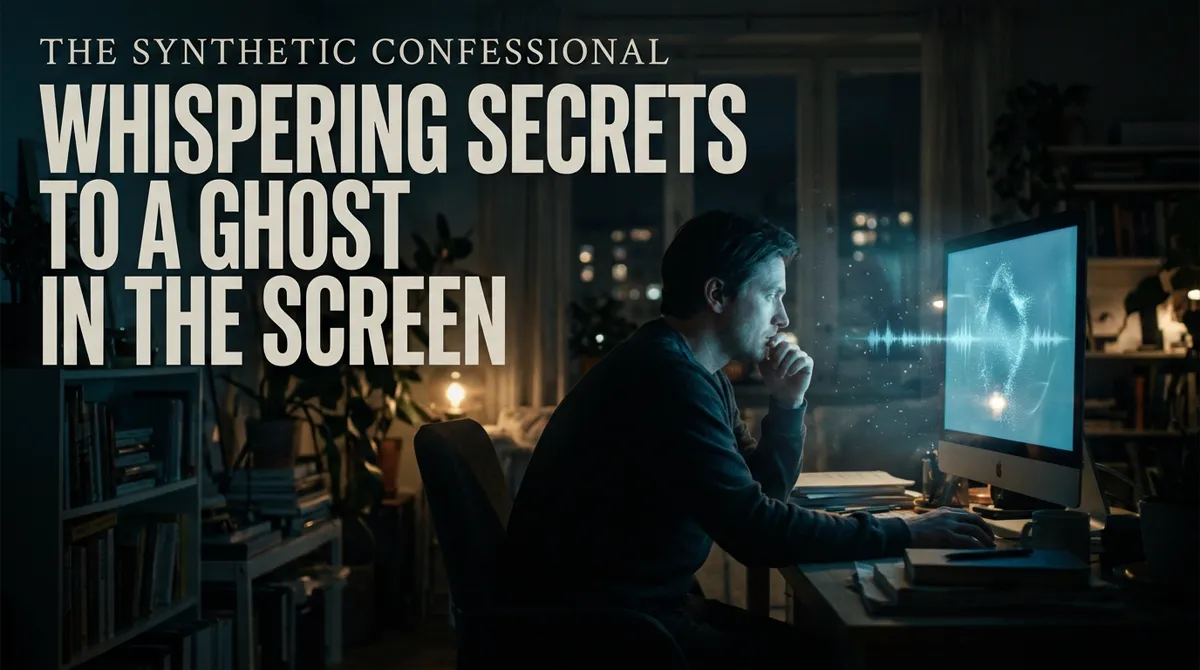
Even when you are lying on your sofa on a Sunday afternoon, supposedly doing nothing, your nervous system is running background processes. The pocket vibrates with an unread work communication; an automated alert reminds you of geopolitical peril; an algorithmic feed quietly audits your social status.
The philosopher Byung-Chul Han, in his seminal work The Burnout Society, argues that modern individuals are no longer exploited by external despots; we have internalized the despot. We are the entrepreneurs of ourselves, constantly optimizing, monitoring, and auditing our own existence.
Under such a regime, even stillness is experienced with a subconscious prickle of existential guilt: Should I be reading something useful? Should I be meal-prepping? Should I be monetizing this silence?
This is why modern rest feels so unrefreshing. True rest requires a sense of safety and finality—the psychological certainty that nothing is demanded of you. When the boundary between duty and dormancy is porous, the mind remains in a state of low-grade autonomic vigilance. The engine is idling, but the key is never turned off.
The Illusion of Frictionless Luxury
We were told that convenience would give us our lives back. Yet there is a dark evolutionary psychology embedded within frictionless living.
Human beings are wired to find meaning through resistance. The muscle grows by tearing against iron; the mind sharpens by wrestling with a difficult, physical text; the community bonds through the shared friction of mutual physical survival.
When every daily friction is smoothed away by digital mediation, reality begins to feel oddly thin and bloodless. You do not touch the baker’s hand when buying bread; you do not smell the wet paper of a morning journal; you do not sit with an unresolved question for three weeks because a search engine regurgitates a summary in two seconds.
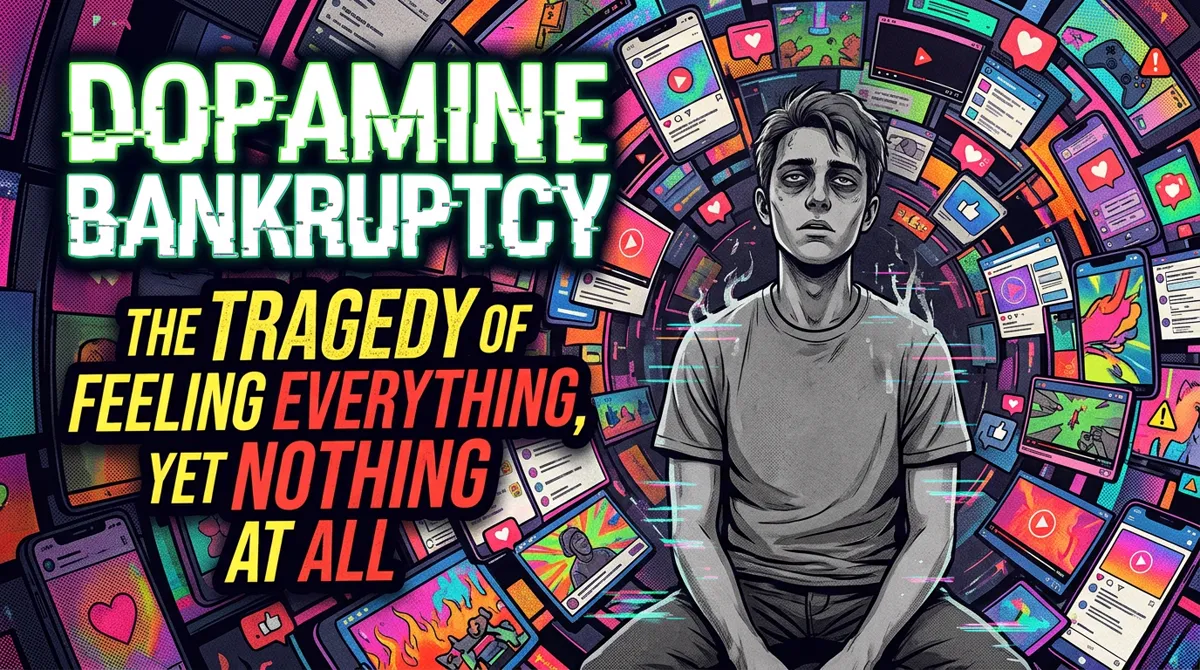
The result is a strange phenomenon that cultural sociologists call anhedonic flatness—a state where nothing is terribly painful, but nothing is profoundly alive either. The world feels wrapped in cellophane. We are exhausted not because we have labored too hard, but because the labor we do feels disconnected from tangible, physical consequence.
Reclaiming the Sacred Friction
How does one heal from an exhaustion that has no medical emergency room?
Quiet burnout cannot be cured by a weekend spa retreat or a lavender-scented bath. You cannot fix a systemic metaphysical crisis with consumer lifestyle patches.
Recovery begins with the deliberate reintroduction of friction.
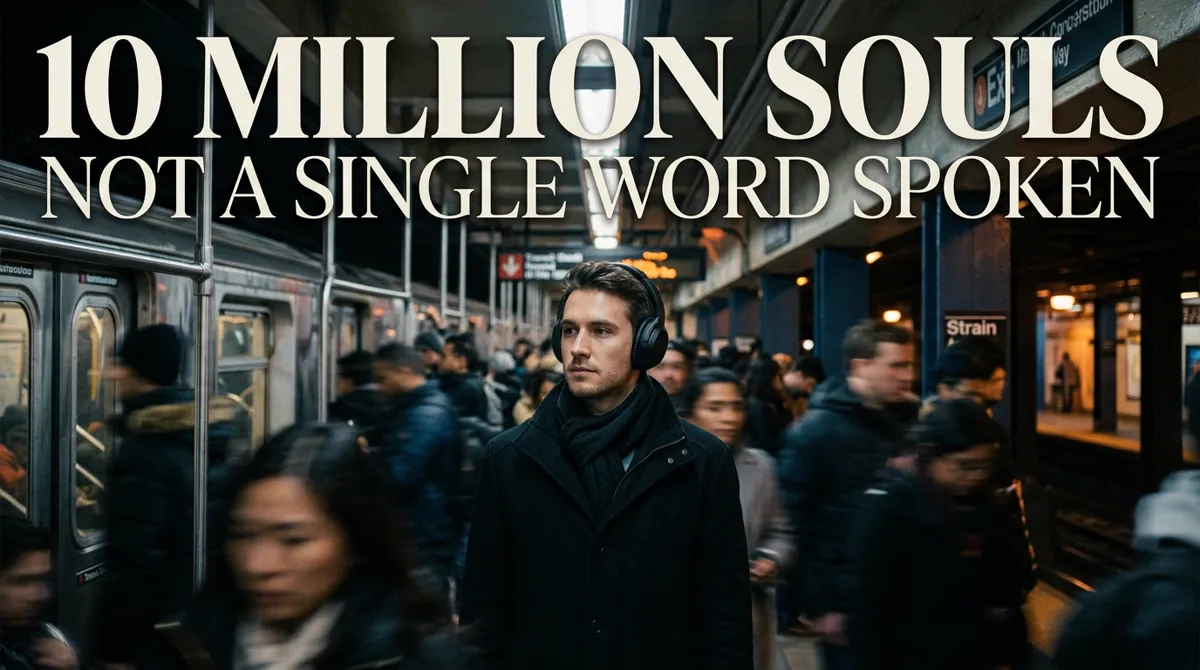
It requires the courage to let an email sit unanswered for twelve hours without apologizing for your mortality. It demands the radical refusal to be constantly legible, instantly reachable, and perpetually optimized. It means walking into the rain without headphones, feeling the cold drops strike the skin of your face, and letting your thoughts wander without the desperate urge to archive them.
The quiet burnout of our age is not a personal defect; it is the natural protest of an ancient, mammalian organism trapped inside an artificial machine that forgot how to sleep. The most revolutionary act left to the modern soul is simply to stop producing, close the door, and let the quiet world be enough.