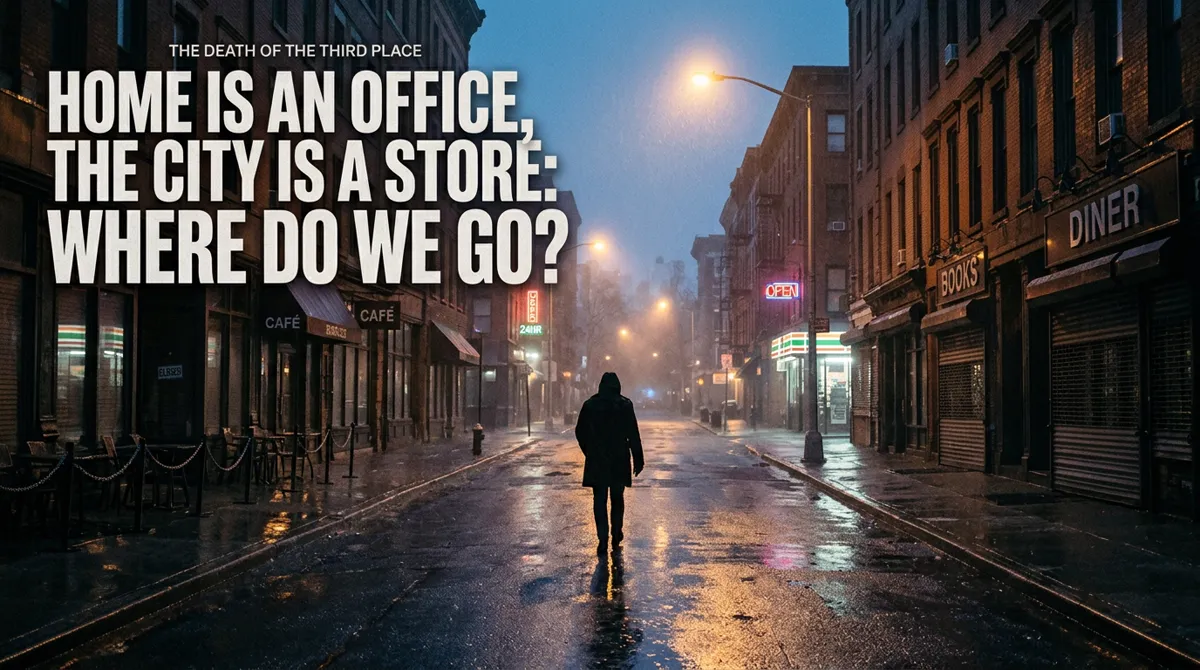
In 1989, the urban sociologist Ray Oldenburg coined a concept that would become essential for diagnosing the emotional health of human civilizations: The Third Place.
The first place, Oldenburg noted, is the home—the private domestic sphere of family, chores, and vulnerability. The second place is the workplace—the realm of economic production, professional hierarchy, and deadlines.
The third place, however, was the linchpin of civic sanity. It was the public or semi-public anchor where people gathered simply to exist in the presence of others: the Viennese coffeehouse, the English pub, the Turkish teahouse, the French bistro, the barber shop, the neighborhood bookstore, the public plaza, the public bench beneath the shade of a plane tree.
Crucially, third places possessed distinct defining characteristics: they were inexpensive or entirely free; they were open and welcoming to anyone regardless of social status; conversation was the primary activity; and they demanded no transaction to justify your presence. You could sit on a wooden stool for three hours, nurse a single glass of tea, read a newspaper, argue about politics, or gaze at passersby without anyone tapping on your table to suggest you move along.
Today, if you walk through nearly any major metropolitan city in the Western world, you will discover that the third place has been systematically eradicated.
To exist in the contemporary city without a credit card in your hand is increasingly treated as a form of social delinquency.
The Pay-to-Play Architecture
Observe what has happened to urban public space over the past four decades.
The public park bench has been redesigned with jagged anti-vagrancy dividers, tilted at uncomfortable angles to prevent human bodies from resting upon it. The public library has had its budget slashed and its operating hours curtailed. The neighborhood diner has been replaced by a sleek, minimalist chain with hard metal chairs engineered by industrial psychologists to induce physical discomfort after twenty-five minutes, ensuring maximum customer turnover.
If you wish to sit down, you must buy an eight-dollar oat milk latte. If you wish to read a book, you must rent a desk in a co-working space. If you wish to gather with friends, you must book a table at a bistro with a ninety-minute dining window enforced by digital reservation algorithms.
Every square meter of contemporary urban geography has been financialized, optimized, and enclosed.
The implicit message broadcast by the modern city to its citizens is ruthless: Unless you are currently in the process of consuming goods, your physical presence in public space is unauthorized.
The Domestic Prison and the Algorithmic Substitute
When the third place vanishes, where do the citizens go?
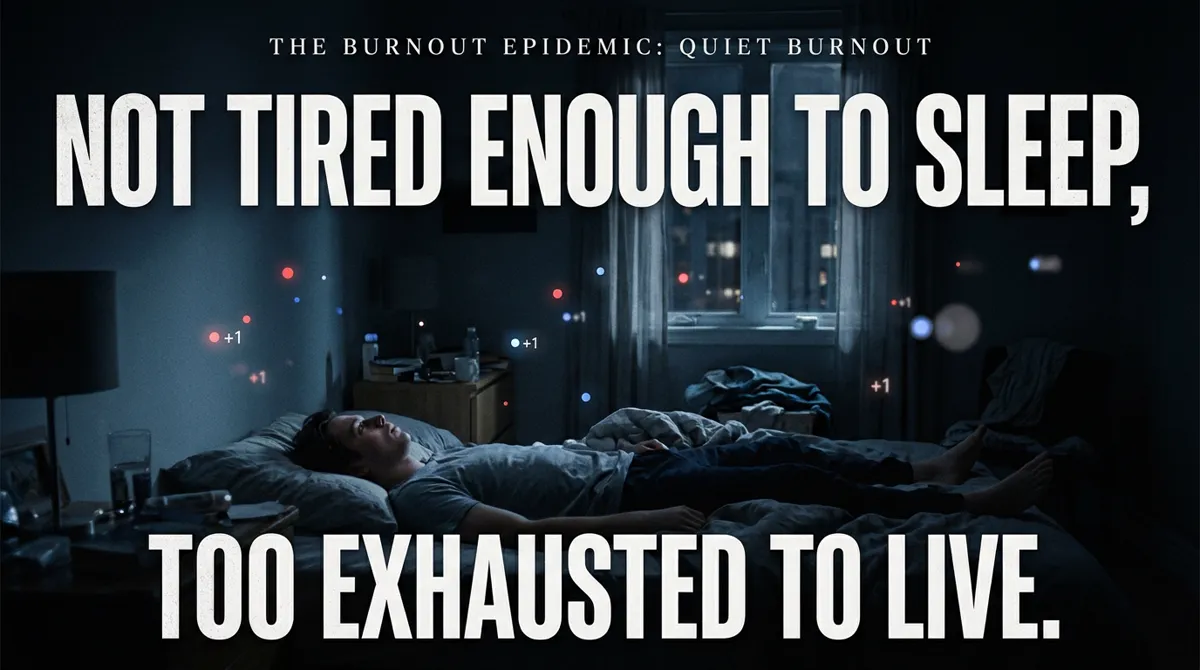
They retreat into the first place: the private home. Yet the home has simultaneously been invaded by the second place through remote work laptops, Zoom conferences, and Slack notifications. The boundary between the domestic sanctuary and the corporate factory floor has dissolved.
Trapped within four walls where work and sleep bleed into each other, the isolated human animal looks for a substitute for the lost village square.
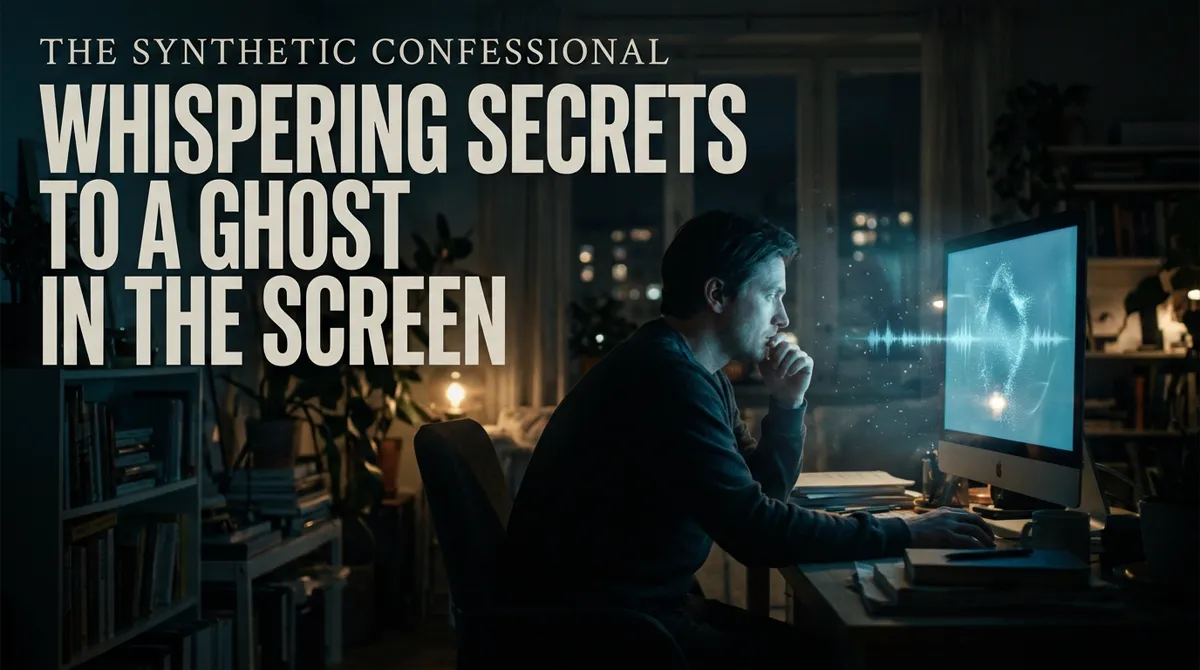
And right on cue, Silicon Valley arrived with the digital third place: the social media feed, the Discord server, the comment section, the algorithmic forum.
We were told that the internet would be the greatest democratic commons ever constructed—a global café where anyone from Nairobi to Chicago could converse freely.
Yet the digital platform is not a third place; it is a behavioral surveillance feed masquerading as a commons.
In a traditional third place, presence is physical, embodied, and localized. You see the twitch of an eyebrow, the gentle hesitation before an apology, the warm smell of ground coffee, the sound of rain on glass. You cannot easily dehumanize someone who is sitting three feet away from you drinking peppermint tea.
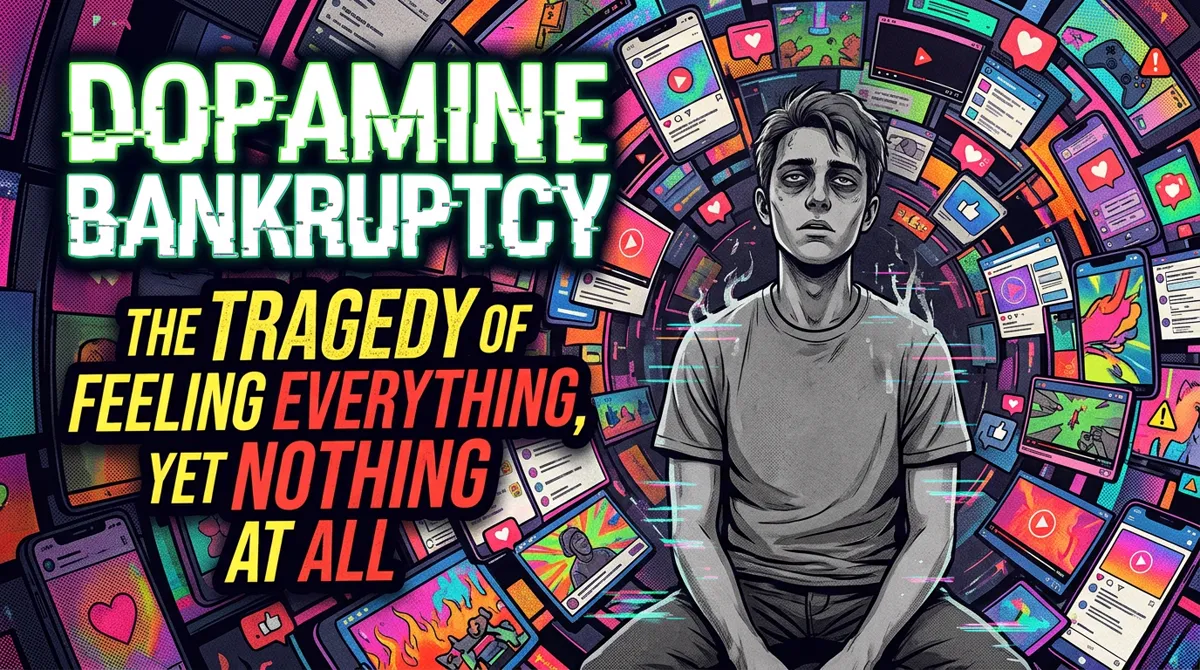
In the digital pseudo-third place, however, the platform’s business model does not monetize calm coexistence; it monetizes emotional dysregulation. The algorithms do not amplify warmth, nuanced listening, or quiet curiosity; they amplify grievance, moral outrage, and division because outrage keeps the eyeball glued to the glass thirty seconds longer for an ad impression.
We traded the neighborhood pub for an arena of competitive digital gladiators.
The Physical Disease of Structural Isolation
When commentators discuss the global “loneliness epidemic,” they routinely treat it as a personal psychological failure—a lack of social skills, an attachment disorder, or a deficiency of personal initiative. We advise lonely citizens to practice cognitive behavioral reframing, join a fitness gym, or download a friend-matching application.
This is like blaming a fish for suffocating after draining the pond.
Human beings did not evolve to maintain social ties purely through intentional, high-stakes appointments booked two weeks in advance over calendar links. We evolved to maintain connection through passive, low-friction, spontaneous encounters—the unplanned chat with the grocer, the nod to the regular sitting on the corner bench, the familiar smile of the stranger who walks the same dog at six o’clock every evening.
Sociologists call these “weak ties,” and public health data reveals they are fundamental to human immunity, cognitive preservation, and psychological resilience.
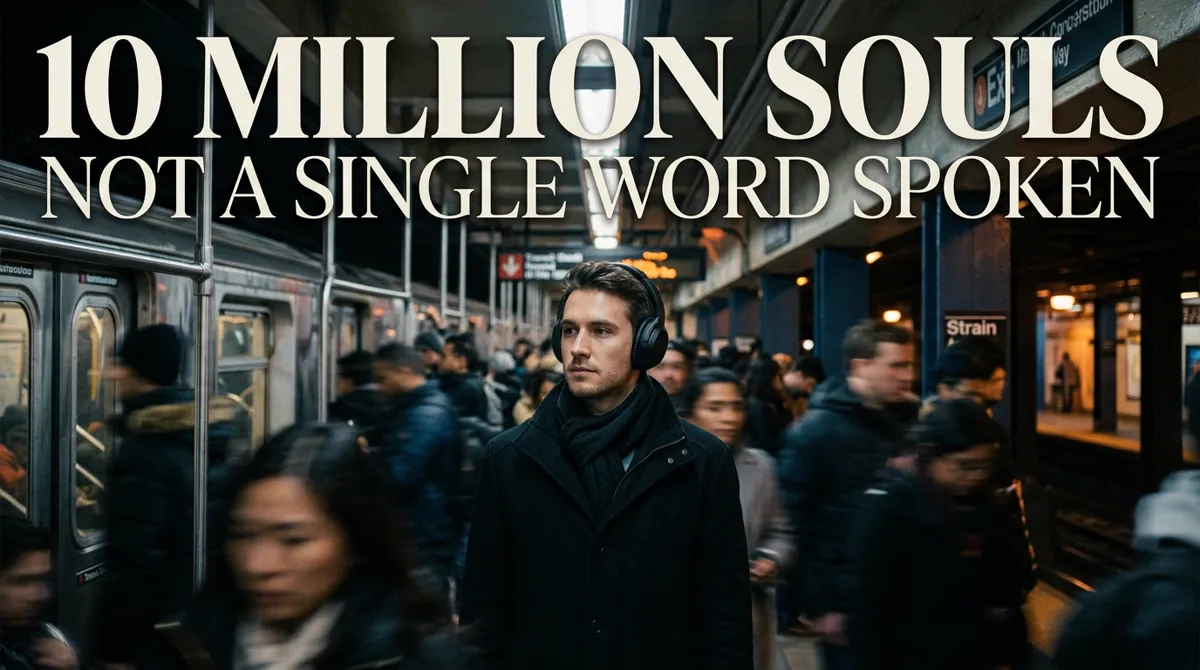
When the architectural infrastructure that supports weak ties is demolished, community does not simply weaken; it collapses into acute civic alienation. Everyone becomes a stranger, and every stranger becomes a potential threat.
The Insurrection of the Public Bench
How does a society rebuild its sanity when the commons have been sold?
It begins by recognizing that access to non-commercial shared space is not a frivolous lifestyle amenity; it is a foundational human right.
It means celebrating and defending the public library as the most sacred, radical civic institution remaining on earth—the only place where you can enter without a penny, sit in warmth for eight hours, read Shakespeare or quantum physics, and be treated with dignity as a citizen rather than a customer.
It means advocating for cities designed for wandering feet rather than rolling steel tires. It means sitting on a public step in the afternoon light, looking up from the phone, and daring to exist in the open air without purchasing a single thing.
The loneliness of our century was not chosen; it was built. And whatever has been constructed by human hands can, with sufficient collective will, be dismantled and built anew.