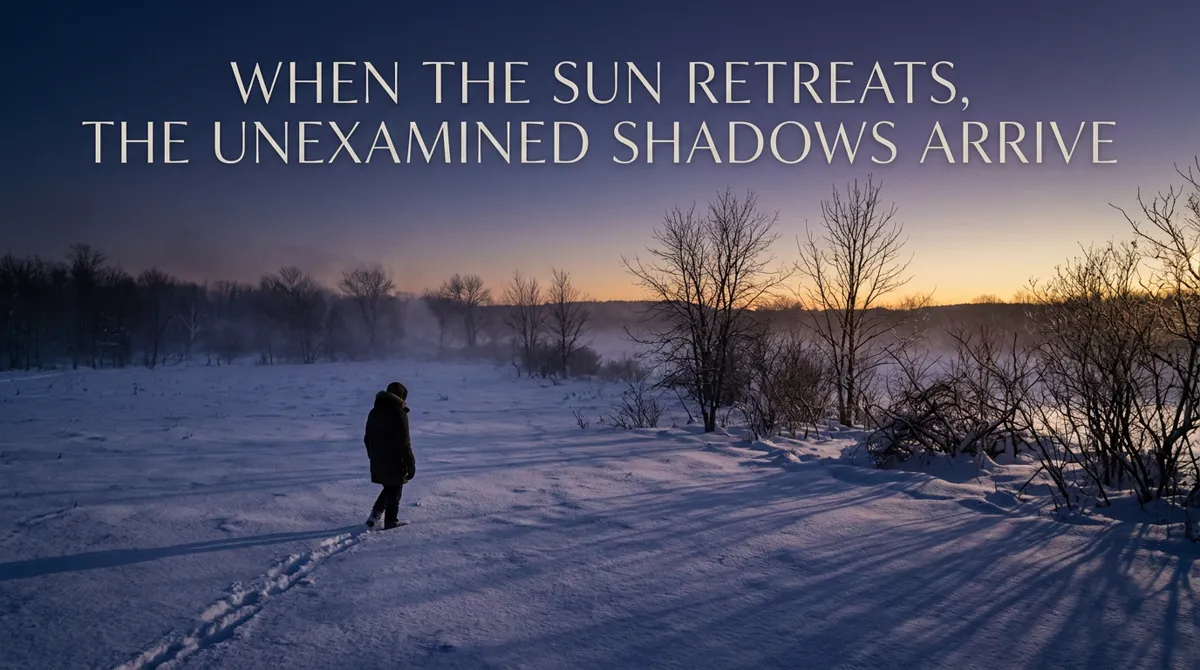
By mid-November across the northern hemisphere, an unmistakable atmospheric transformation settles over the land.
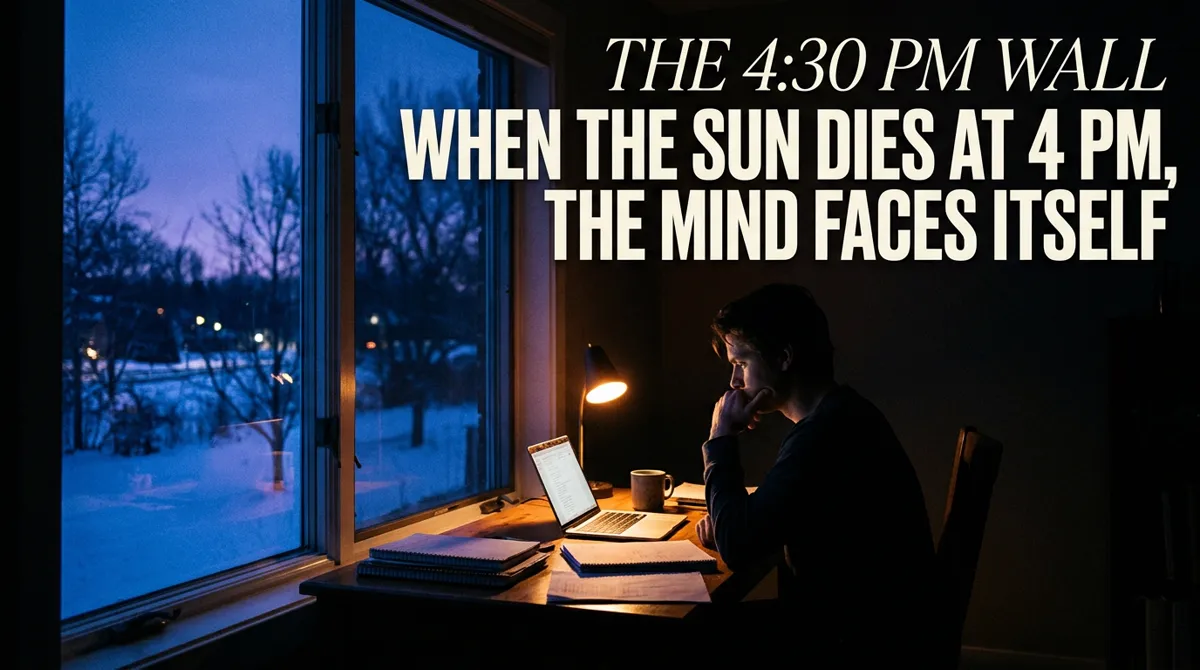
At half past four in the afternoon, the sky curdles from slate gray into bruised violet. The shadows along the streets stretch until they swallow the sidewalks. Commuters emerge from subway stations into pitch darkness, blinking in disbelief that the working day has ended in what feels like the dead of night.
The cultural response to this seasonal shift is almost universally pathologized. We buy 10,000-lux fluorescent light therapy lamps to blast into our retinas over morning coffee. We increase our vitamin D dosages. We consume lifestyle articles warning of the dread “Seasonal Affective Disorder” (SAD), framing the early dusk as an enemy to be medically countered, outsmarted, and suppressed.
Yet look beneath the clinical panic, and a much older, deeper question emerges:
What if the melancholy of winter is not a biological malfunction? What if the retreat of the sun is an ancient, evolutionary architecture designed to force the human soul to sit down, close the door, and look within?
The Tyranny of the Perpetual Summer
Modern industrial civilization is built upon a profound ecological lie: the dogma of the perpetual summer.
Capitalism demands linear, uninterrupted productivity. You are expected to produce the same quantity of corporate deliverables, generate the same metrics, radiate the same cheerful networking energy, and wake up at the same hour on a freezing morning in December as you do on a balmy morning in June.
Our buildings are climate-controlled to a sterile 21 degrees Celsius year-round; our supermarkets are stocked with identical Chilean strawberries in mid-winter; our LED fixtures mimic high-noon luminescence until midnight.
We have declared war on seasonality.
Yet every other living organism on this planet obeys the sacred rhythm of the retreat. The oak tree does not apologize for dropping its leaves and allowing its sap to sink deep into the frost-bitten earth; the bear does not feel guilty for curling into the quiet dark of a den; the soil rests in frozen dormancy, gathering the mineral potency required for spring germination.
Only the modern human believes that dormancy is a moral failure.
When the daylight shortens and the serotonin levels gently subside, the body is not failing; it is attempting to hibernate. It is asking you to slow down, to speak more softly, to sleep ten hours instead of seven, and to abandon the frantic exterior expansion of the summer in favor of the quiet consolidation of the interior.
The Chemistry of Introspection
Neurobiologists know that the pineal gland, responding to the reduction of photons hitting the retinal ganglion cells, shifts its production toward melatonin earlier in the day. Blood pressure gently drops; the sympathetic nervous system downregulates; the metabolic furnace cools.
In popular culture, this shift is lamented as “brain fog” or “lethargy.”
In literature and philosophy, however, this exact chemical state has another name: the contemplative trance.
The bright, blazing sunlight of July is outward-facing; it demands action, adventure, social display, and the cultivation of the exterior mask. It is difficult to read a difficult nineteenth-century novel or contemplate the brevity of mortal life while sitting on a crowded beach with sunscreen burning your eyes.
Winter darkness is inward-facing. It creates an immediate physical sanctuary.
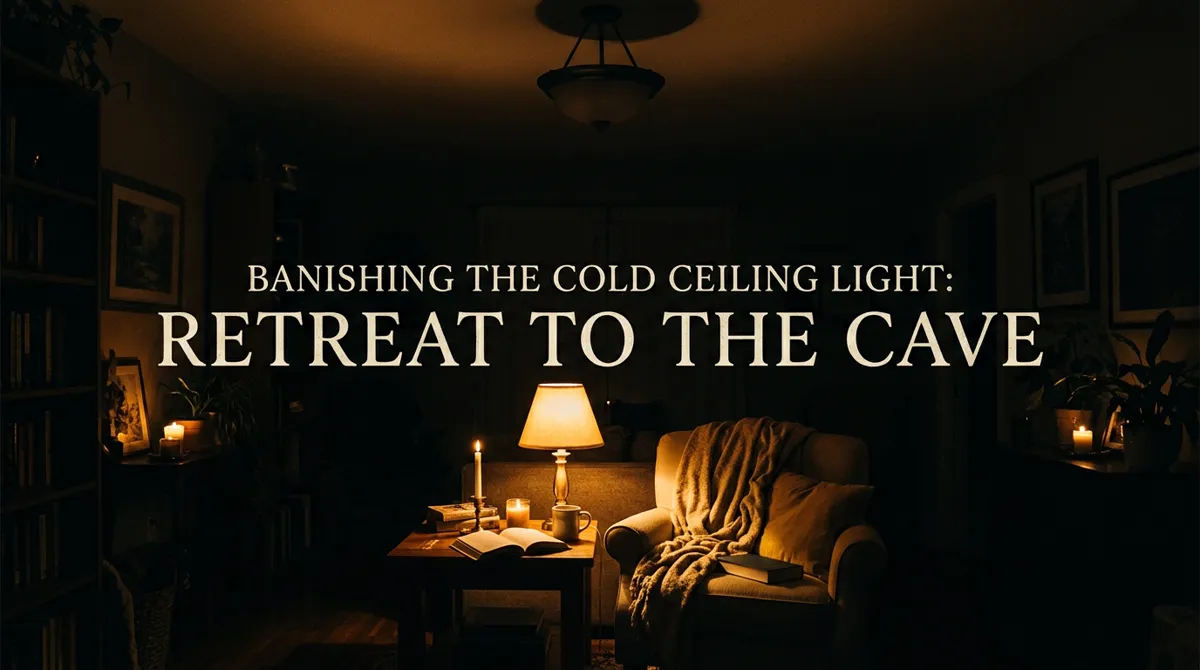
When the window panes turn black and the rain or snow begins to tap against the glass, the perimeter of your world shrinks from the infinite horizon down to the pool of warm amber light cast by a single desk lamp. The external distractions are erased. You are enclosed. The mind is gently pushed into the deeper, quieter chambers of memory, philosophy, and unhurried reflection.
The Ancestral Hearth
For hundreds of thousands of years, the onset of winter was marked by the sacred ritual of the hearth.
When the snow fell across the Eurasian steppe or the North American forests, human bands retreated into shelters. The frantic gathering, hunting, and migrating ceased. Families gathered around the embers in total darkness.
This was the season when myth was born. In the deep winter nights, elders told the great genealogical stories, philosophers contemplated the origin of the cosmos, and poets wove epics. The darkness was the canvas upon which human imagination learned to paint.
To sit in a cold room in November, watching the blue dusk settle over bare branches, is to participate in that primal mammalian memory.
You are not depressed; you are simply remembering the cold. You are feeling the weight of the dark that kept your ancestors alive by forcing them to stay by the fire and listen to each other breathe.
Surrendering to the Dark
How does one survive the winter without going mad?
Not by pretending it is summer. Not by forcing yourself to maintain the frantic social velocity of the solstice.
The art of wintering requires a radical act of surrender.
It means forgiving yourself for being quiet. It means accepting that some months are for blooming, and other months are for roots to grow deep into the dark, frozen loam. It means lighting candles, boiling water for bitter tea, wrapping your shoulders in wool, and allowing your thoughts to take on the solemn, majestic cadence of the season.
The darkness is not an absence of life; it is the cradle from which all light is born. To fear the winter is to fear the half of existence that makes wisdom possible. Let the sun go down. Let the cold arrive. The quiet corridor is waiting.