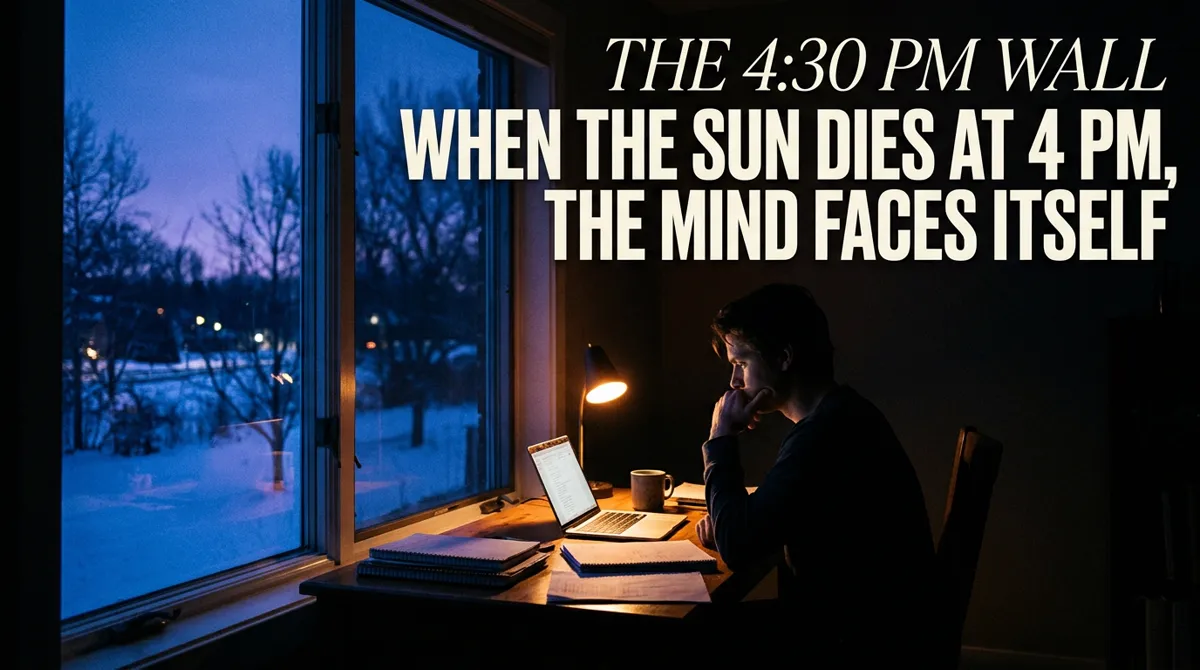
You glance away from your screen for a fleeting moment, stretch your neck, and look out the office window.
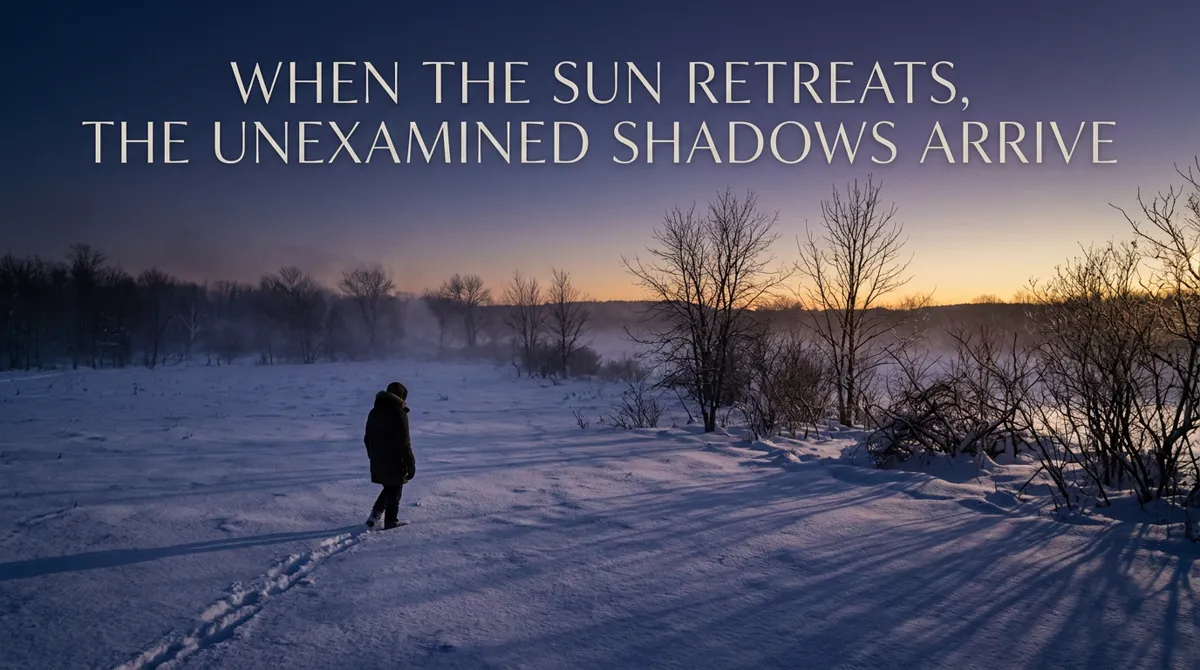
The world outside is no longer amber or golden; it is pitch-black. The clock in the corner of your monitor reads 4:37 PM. You still have two hours left of your shift, meetings left to endure, emails left to compose. Yet somewhere deep in the ancient, unmapped crevices of your reptilian brain, a biological circuit has tripped. An instinctive voice whispers: The day is dead. Why are you still sitting under fluorescent lights pretending to care?
This is the 4:30 PM Wall—an abrupt, annual shock to the human nervous system that occurs every November when daylight saving time terminates across the northern hemisphere. It is not merely an inconvenience or a subject for polite elevator small talk. It is a profound, somatic bereavement: the grief of stolen afternoons, the sudden collapse of transition time between public labor and private survival.
The Stolen Horizon: When the Day Breaks in Half
In the natural world, dusk is a slow, symphonic ritual. Ancestral humans watched shadows lengthen across hours, reading the gradual cooling of the sky as a gentle summons to light campfires, gather close, and prepare the nervous system for restorative darkness. Twilight was a buffer zone—a psychological porch sitting between the demands of the hunt and the stillness of the cave.
Modern industrial society has eliminated the porch. We demand that human beings maintain the exact same metabolic output, focus, and cheerful consumer engagement at 5:00 PM in November as they did at 5:00 PM in June.
When you leave an office or close your laptop in November, you do not walk into twilight; you step directly into the maw of midnight. The brain perceives this temporal dislocation as a form of theft. The outdoor world—the sidewalk, the park bench, the lingering neighborhood walk—has been wiped clean by premature obsidian shadows. You are forced directly from the prison of artificial productivity into the shelter of artificial interior lighting, without ever touching the earth while it was awake.
The Melatonin Collision
What you experience at 4:30 PM is not moral weakness, and it is not a lack of discipline. It is a violent biochemical collision.
The human retina contains specialized intrinsically photosensitive retinal ganglion cells (ipRGCs) that process ambient blue-frequency light. When the sky dims, these cells signal the suprachiasmatic nucleus—the master clock in your hypothalamus—to greenlight the release of melatonin.
Under natural conditions, this surge would happen gradually as you rested beside embers. But under modern schedules, your brain is flooded with sleep-inducing hormones while your boss is still speaking on a conference call. To survive the contradiction, your system releases emergency cortisol to force your eyelids open. You are simultaneously sedated and anxious, dragging an exhausted nervous system through tasks that have lost all contextual meaning.
This biochemical mismatch produces a distinct cognitive state: circadian dissociation. The tasks in front of you appear surreal. Spreadsheets seem absurd against the backdrop of an impenetrable night that has already settled outside your glass box.
The Modern Mourning of Lost Sunlight
On internet forums across the Western hemisphere, thousands of nocturnal confessions surface every November with haunting regularity: “The sun is dying, and I feel like I am dying with it.”
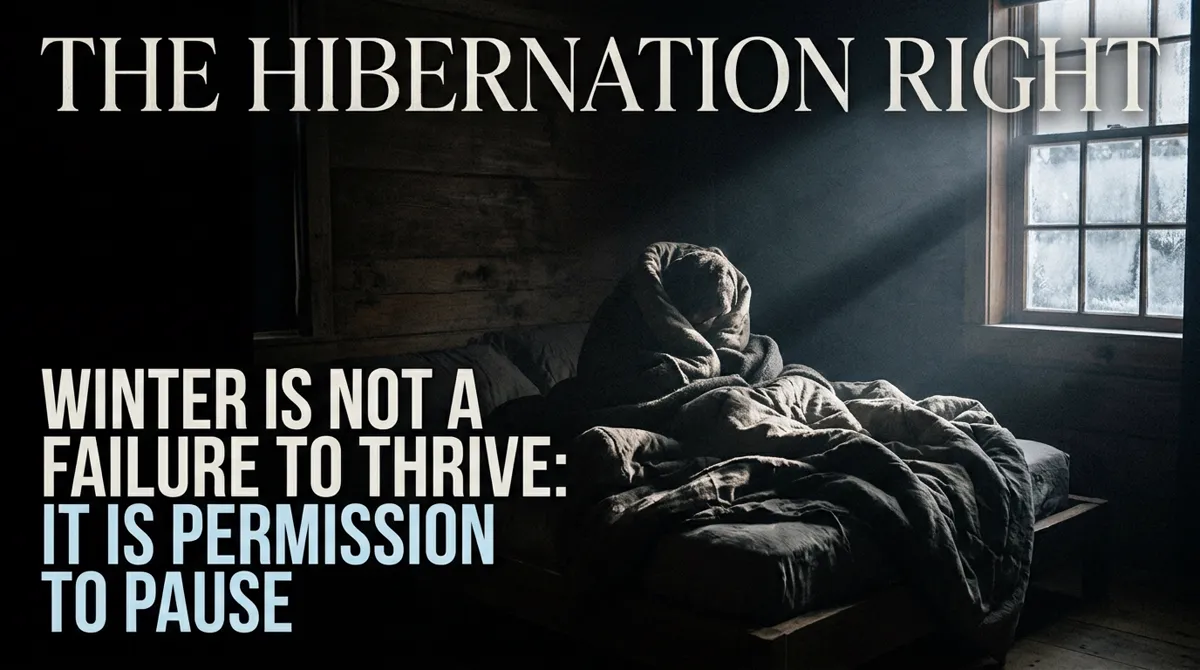
We are the first species in planetary history that attempts to out-argue winter. Bears hibernate. Trees drop their leaves and conserve their sap in silent roots. Deciduous life surrenders to austerity. Only modern human beings view a biological downshift as a character flaw to be medicated with double espressos and bright fluorescent lamps.
The early darkness forces an uninvited reckoning. In the summer, endless daylight provides a convenient anesthetic; we outrun our existential unease with patio drinks, long evenings, and the perpetual momentum of movement. But when darkness arrives at 4:30 PM, the running stops. The world contracts into narrow interior perimeters. The silence arrives hours ahead of schedule.
Learning to Inhabit the Dark
How does a conscious mind survive the winter wall without surrendering to despair?
The answer lies in abandoning the desperate attempt to treat November like July. The grief you feel when looking out at that 4:30 PM darkness is real, and it deserves acknowledgment rather than chemical suppression.
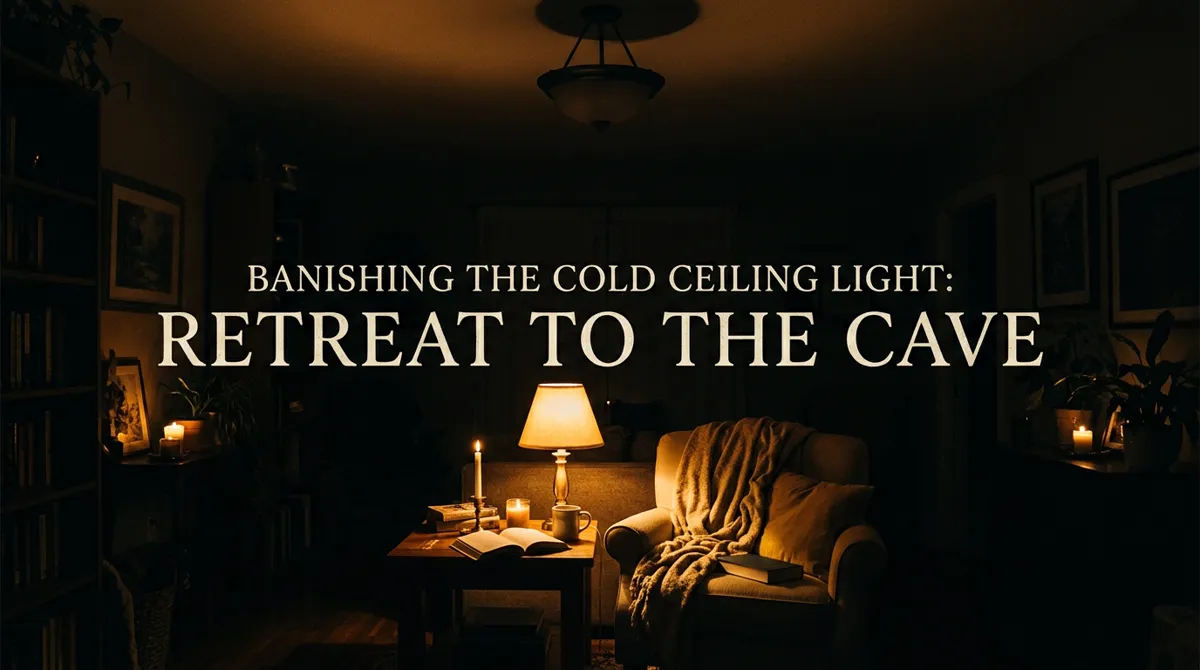
When the sun vanishes early, grant yourself permission to let the feverish ambitions of midday cool down. Lower the lights in your living quarters. Ban the harsh, sterile ceiling fixtures in favor of warm, low-level amber sources that signal safety to your ancestral biology. Recognize that your fatigue is not failure—it is the ancient, legitimate voice of an organism remembering that it was never designed to be a machine that runs perpetually without winter.