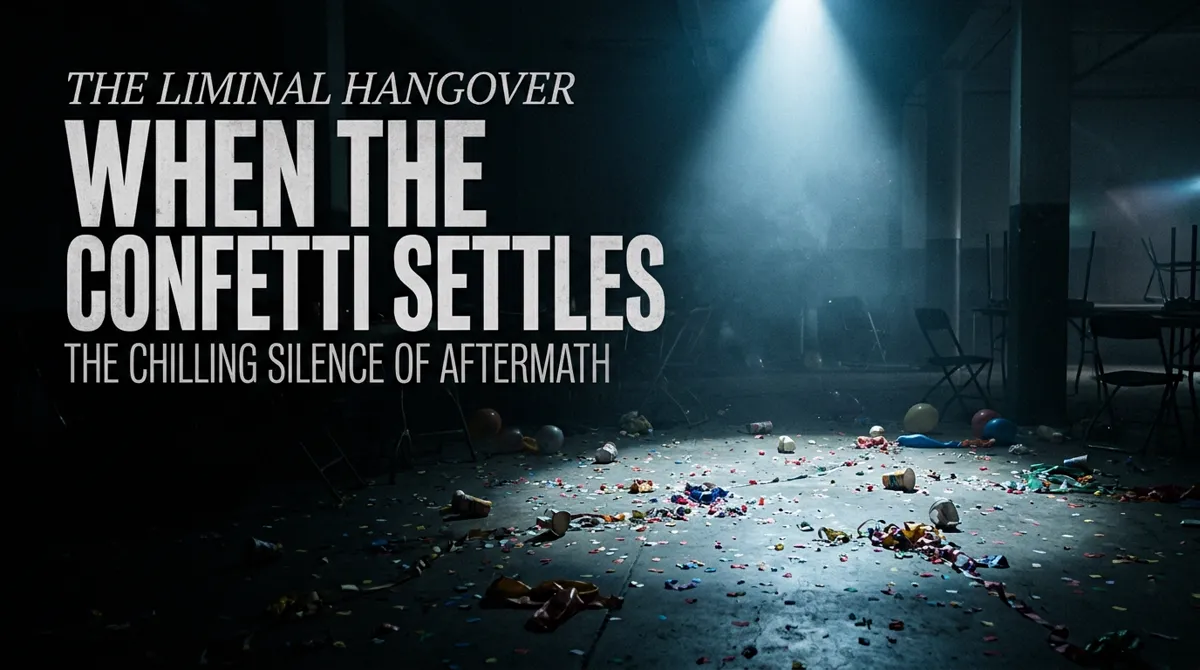
It is 1:15 AM on January 1st—or the evening after Thanksgiving dinner, or the afternoon of December 26th.
The last guest has stepped through the front door into the freezing night. The car engines have faded down the street. In the living room, crumpled napkins, half-empty wine glasses, and discarded wrapping paper sit in disarray. The festive music is off. The only sound is the low, mechanical hum of the refrigerator.
You sink onto the sofa, survey the domestic ruins, and an acute, icy hollow opens up behind your ribs.
You are not just physically tired. You are experiencing the Liminal Hangover—that haunting, inexplicable post-spectacle emptiness that arrives whenever a grand, long-anticipated cultural milestone suddenly collapses back into ordinary, mundane reality.
The Dopamine Architecture of Anticipation
Why does the aftermath of celebration hurt so deeply?
To understand this phenomenon, we must look to the neurobiology of desire. As neuroscientist Wolfram Schultz and primatologist Robert Sapolsky famously proved, dopamine is not the neurochemical of satisfaction; it is the neurochemical of anticipation.
When you spend weeks planning a holiday, curating a dinner menu, shopping for gifts, or counting down to New Year’s Eve, your brain is flooded with dopamine. The joy is in the horizon. Your mind paints an idealized, cinematic portrait of how transformative the event will feel: the perfect conversation, the transcendent connection, the magical midnight kiss that resets the universe.
However, the event itself can never compete with its hypothetical ghost. A holiday dinner is just people eating food; New Year’s Eve is just sixty seconds ticking down on a clock before you have to brush your teeth and go to sleep.
The moment the milestone actually arrives, your dopamine levels do not gently plateau—they plunge into a deficit. The chemical curtain falls, leaving your nervous system depleted in the quiet silence of the aftermath.
The Melancholy of the Liminal Dissolution
Beyond neurochemistry, there is a profound metaphysical reason for this sadness: the dissolution of liminal space.
A holiday season acts as a temporary suspension of reality. For a few brief days, the brutal rules of ordinary life are held in abeyance:
- The corporate email notifications cease.
- The diet is paused; indulgence is celebrated.
- The dark winter is masked by shimmering fairy lights and evergreen wreaths.
We inhabit a collective illusion that we are protected from the passage of time.
When the celebration ends, the illusion evaporates with ruthless speed. The realization hits: Tomorrow is Monday. The calendar has changed numbers, but my debts are still here, my body still aches, my loneliness has not dissolved, and the cold winter remains long and unyielding.
The liminal hangover is the grief of being expelled from the sanctuary of make-believe and dropped unceremoniously back into the unvarnished machinery of daily existence.
The Art of Inhabiting the Ashes
How do we endure the post-holiday silence without succumbing to despair?
- Reframe the Emptiness: That hollow ache in your chest is not evidence that your holiday failed, or that your life is defective. It is simply the natural, biological deceleration of a system returning to stillness after a period of overstimulation. Welcome the silence as an old friend.
- Find Beauty in the Aftermath: There is a rare, poetic dignity in the quiet house after the storm of company has departed. Wash the glasses slowly under warm water. Stack the plates. Savor the fact that no more performance is required of you tonight.
- Fall in Love with the Ordinary: Grand celebrations are fever dreams; real life takes place in the quiet spaces between milestones. The sacred work of consciousness is not in building artificial spectacles, but in finding reverence in the unglamorous, repetitive texture of ordinary days.
When the confetti settles and the room goes dark, do not run from the silence. Sit in the stillness, breathe in the cold night air, and remember: You do not need an artificial holiday to sanctify your existence. Your existence is already sacred in the quiet dark.